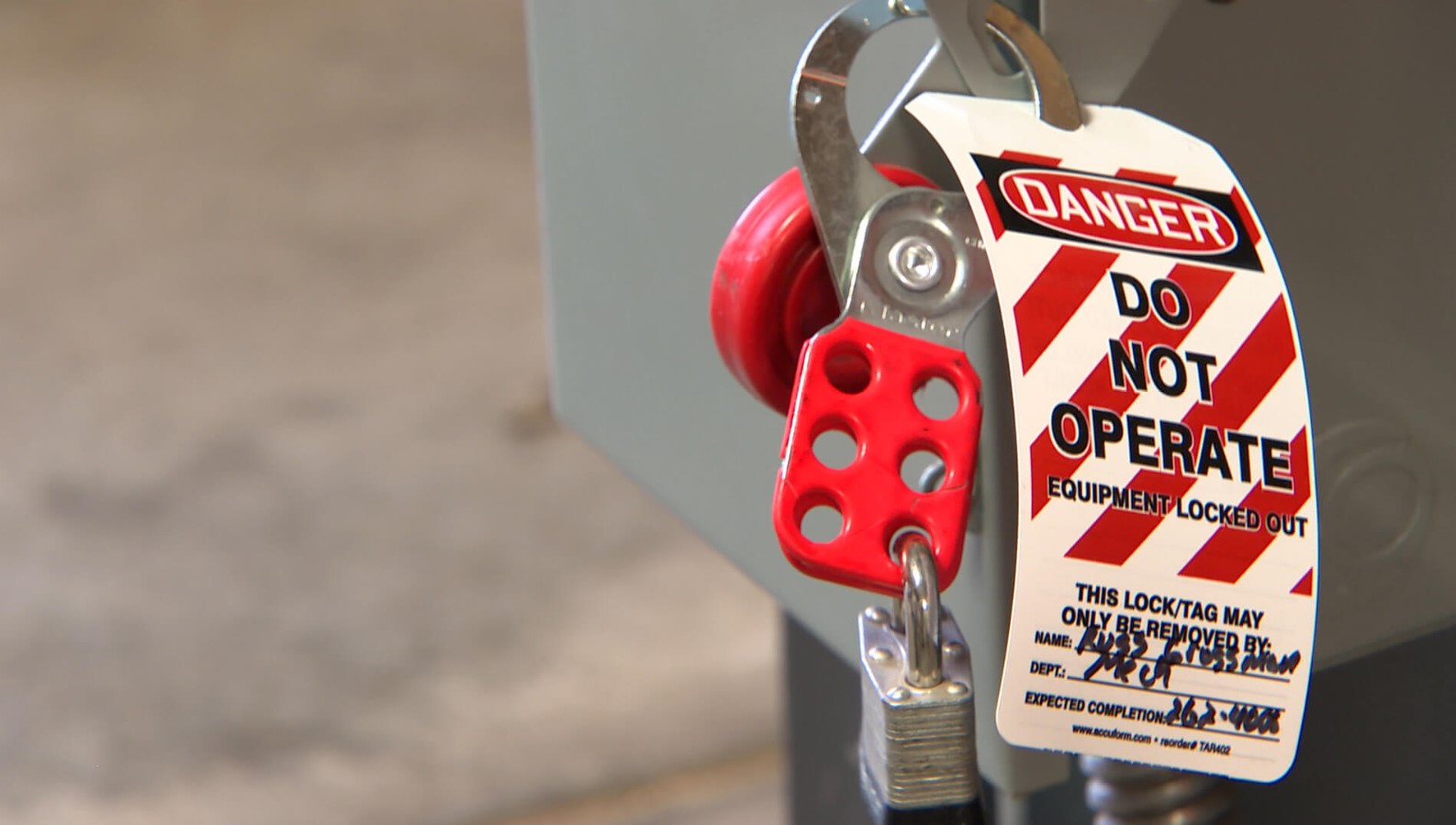
Every year, preventable accidents occur in manufacturing, maintenance, and industrial facilities—often because a machine was restarted unexpectedly during servicing. Lockout/Tagout (LOTO) safety posters aren’t decorative wall space fillers. They’re frontline tools in a broader energy control strategy, serving as constant visual reminders that lives depend on strict procedures.
When a maintenance technician powers down a conveyor system, attaches their lock, and tags the energy source, it’s not just protocol—it’s protection. But what happens when others don’t understand the procedure? Or worse, bypass it because it seems inconvenient? That’s where LOTO safety posters step in: not as passive signs, but as active enforcement aids that standardize behavior, reinforce training, and reduce human error.
These posters do more than comply with OSHA 1910.147—they shape a culture where safety is visible, consistent, and non-negotiable.
Why LOTO Safety Posters Matter in Real-World Operations
In high-noise, fast-paced environments, written procedures can get lost. Training fades. Complacency creeps in. A well-placed LOTO safety poster cuts through the mental clutter.
Consider a maintenance team working overnight on a hydraulic press. The shift supervisor locks out the main power, but a new technician unfamiliar with the site attempts to restart it—unaware that someone is still inside the machine guard. A bold, high-contrast poster near the disconnect switch stating “DO NOT OPERATE—LOCKED OUT FOR MAINTENANCE” could stop a disaster.
Posters work because they are: - Always on duty—unlike trainers or supervisors - Language-optimized—many use symbols (like padlocks, hazard triangles) to transcend literacy and language barriers - Reinforcement tools—supporting formal training with daily visual cues
Without them, even seasoned workers may take shortcuts—especially under production pressure.
Core Elements of Effective LOTO Safety Posters
Not all safety posters are created equal. A poorly designed sign gets ignored. The most effective LOTO posters follow a clear visual and informational hierarchy:
#### 1. Command Clarity The message must be immediate and directive. Use phrases like: - “Lockout Required Before Servicing” - “One Person, One Lock, One Key” - “Zero Restart Until All Locks Are Removed”
Avoid passive language. “Please remember to lock out” lacks authority. “Failure to lock out = serious injury” creates urgency.
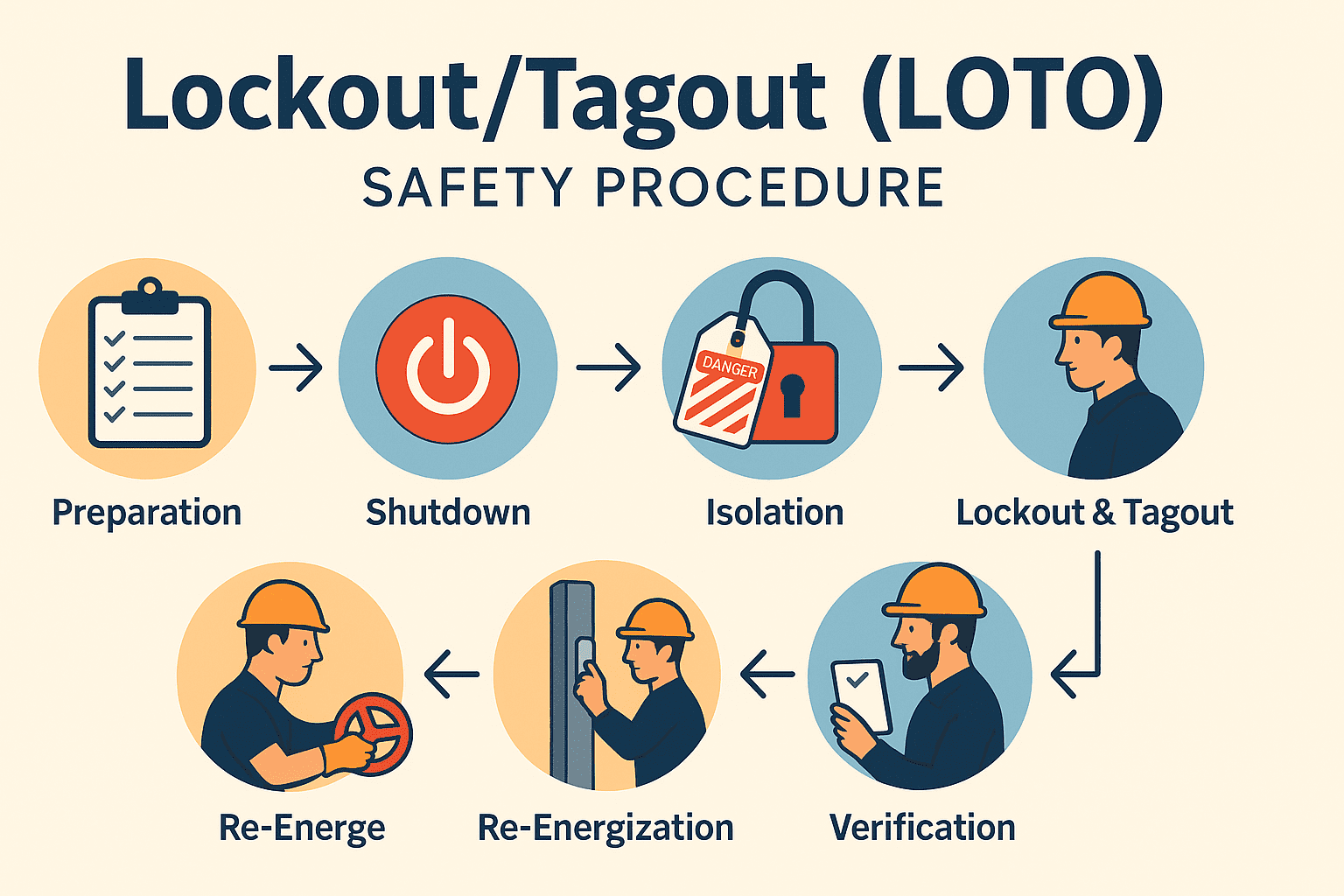
#### 2. Visual Hierarchy Use a top-down layout: - Header: Bold, high-contrast text (e.g., red/white or yellow/black) - Iconography: Universal symbols for lockout, electrical hazard, moving parts - Steps: Numbered LOTO procedure (isolate, lock, verify, tag, etc.) - Footer: Company safety policy or OSHA reference
Color psychology matters. Red signals stop/danger. Yellow means caution. Green indicates safety actions. Stick to ANSI Z535 standards for consistency.
#### 3. Situational Relevance Generic posters fail. A LOTO sign for a chemical valve system should reflect fluid hazards. A machine-specific poster near a CNC lathe should show the correct lockout point and energy sources (electrical, pneumatic).
Customization increases engagement. Workers are more likely to follow a procedure that reflects their actual workspace.
Where to Install LOTO Safety Posters for Maximum Impact
Location determines effectiveness. A poster in a break room won’t stop someone from bypassing a lockout at a motor control center.
Strategic placement includes: - Near energy isolation points: Circuit breakers, valve manifolds, disconnect switches - At machine entry points: Guard doors, service hatches - Entrances to high-risk zones: Confined spaces, high-voltage rooms - Training areas and safety boards: Reinforce learning during toolbox talks
One plant reduced unauthorized restarts by 72% simply by adding full-size LOTO posters at every main disconnect panel—paired with floor markings and lock stations.
Avoid clutter. One powerful poster per zone beats five competing signs.
Common Mistakes That Undermine LOTO Poster Effectiveness
Even well-designed posters can fail due to poor implementation. These pitfalls are common:
- Using outdated OSHA language – Regulations evolve. Posters should reflect current standards.
- Poor visibility – Mounted too high, behind equipment, or in low-light areas.
- Lack of maintenance – Faded, torn, or dirty signs lose authority.
- Overloading with text – More than 25 words per panel reduces comprehension.
- Ignoring multilingual workforces – Use pictograms and translate key warnings.
A food processing plant in Georgia had excellent LOTO procedures—but their posters were in English only. After two near-misses involving Spanish-speaking technicians, they redesigned all safety signage with dual-language warnings and standardized symbols. Incidents dropped to zero within six months.
Integrating Posters into a Broader LOTO Program
Posters alone don’t ensure compliance. They’re one piece of a layered safety system that includes:
- Initial and refresher training
- Written energy control procedures
- Lockout kits and lock stations
- Audits and compliance checks
- Management accountability
Use posters to anchor training. During onboarding, walk new hires past each LOTO sign, explain its meaning, and tie it to real scenarios.
One utility company prints QR codes on their LOTO posters. Scanning the code pulls up a 90-second video of the correct lockout steps for that specific machine—turning static signage into interactive learning.
Top 5 LOTO Safety Poster Solutions for Industrial Sites
Not all vendors deliver equal quality. These providers consistently offer high-impact, compliant, and customizable LOTO signage:
| Vendor | Key Strength | Best For | Notable Feature |
|---|---|---|---|
| Seton | OSHA-compliant templates | Quick deployment | Large catalog, instant printing |
| Grainger | Durable materials | Harsh environments | Weather-resistant vinyl options |
| SafetySign.com | Custom design | Site-specific risks | Free design support + multilingual |
| Justrite | Machine-specific kits | Manufacturing | Bundled with lock stations |
| Clarion Safety | ANSI/ISO compliance | Global operations | Expertise in regulatory alignment |
Choose based on your environment. A chemical plant needs corrosion-resistant signs. A warehouse may prioritize large, floor-standing displays near forklift charging stations.
How to Audit and Update Your LOTO Poster Program
Posters degrade. Procedures change. Workflows evolve. A static sign program becomes obsolete.
Conduct a quarterly visual audit: - Are signs clean, legible, and properly mounted? - Do they match current equipment and lockout points? - Are new hazards covered (e.g., added machinery)? - Are multilingual needs still met?
Update posters when: - Equipment is retired or replaced - OSHA updates regulations - An incident reveals a communication gap - Workforce demographics shift
One refinery reviews all safety signage every 18 months—aligning updates with shutdown periods. This ensures minimal downtime and maximum compliance.
Real-World Use Case: Reducing LOTO Violations in an Auto Parts Plant
An auto components manufacturer faced repeated LOTO violations. Audits showed workers often bypassed lockout on robotic welders, assuming “quick fixes” didn’t require it.
The safety team responded with a targeted poster campaign: - Installed large-format signs at each robot cell entrance - Used a photo of an actual near-miss incident (with consent) - Added step-by-step lockout flow: “Isolate > Lock > Test > Tag > Work” - Included a red QR code linking to the full procedure
Within four months, observed violations dropped from 11 per week to 1. Workers reported the visuals made the risk “feel real.”
Closing: Make Safety Impossible to Ignore
LOTO safety posters are not compliance checkboxes. They’re behavioral nudges, training reinforcements, and silent guardians in environments where a single mistake can be fatal.
The best ones combine clarity, compliance, and context. They’re placed where decisions are made. They speak to workers in their language—visual, direct, urgent.
Don’t settle for generic signs. Audit your current setup. Replace faded or vague posters. Customize for your equipment. Integrate with training.
Because when a technician reaches for a switch, it shouldn’t be a guess whether the machine is safe. It should be obvious—thanks to the poster that makes the rules impossible to miss.
FAQ
What makes a LOTO safety poster OSHA-compliant? It must clearly communicate the hazard, required action (lockout), and reference the energy control procedure. While OSHA doesn’t mandate specific design, it requires effective communication—which compliant posters deliver through standardized symbols and language.
Can digital screens replace physical LOTO posters? Not reliably. OSHA requires consistent, always-visible warnings. Digital displays can fail or cycle off-message. Physical signs are preferred for critical safety points.
Should LOTO posters include step-by-step procedures? Yes. A concise 5–6 step LOTO process (isolate, lock, verify, etc.) reinforces training and supports quick recall during high-stress situations.
How often should LOTO posters be replaced? Inspect quarterly. Replace when faded, damaged, or outdated. High-traffic or harsh environments may require annual replacement.
Do small workshops need LOTO posters? Yes. Any site with machines requiring servicing must follow OSHA 1910.147. Posters help even one-person shops stay compliant and safe.
Can we make our own LOTO posters? Yes, but ensure they follow ANSI Z535 standards for symbols, colors, and layout. Poor design can create confusion or non-compliance.
Are bilingual LOTO posters necessary? If your workforce uses multiple languages, yes. Safety signs should be understood by everyone. Use pictograms and translated text to ensure clarity.
FAQ
What should you look for in Lockout Tagout LOTO Safety Posters That Prevent Accidents? Focus on relevance, practical value, and how well the solution matches real user intent.
Is Lockout Tagout LOTO Safety Posters That Prevent Accidents suitable for beginners? That depends on the workflow, but a clear step-by-step approach usually makes it easier to start.
How do you compare options around Lockout Tagout LOTO Safety Posters That Prevent Accidents? Compare features, trust signals, limitations, pricing, and ease of implementation.
What mistakes should you avoid? Avoid generic choices, weak validation, and decisions based only on marketing claims.
What is the next best step? Shortlist the most relevant options, validate them quickly, and refine from real-world results.