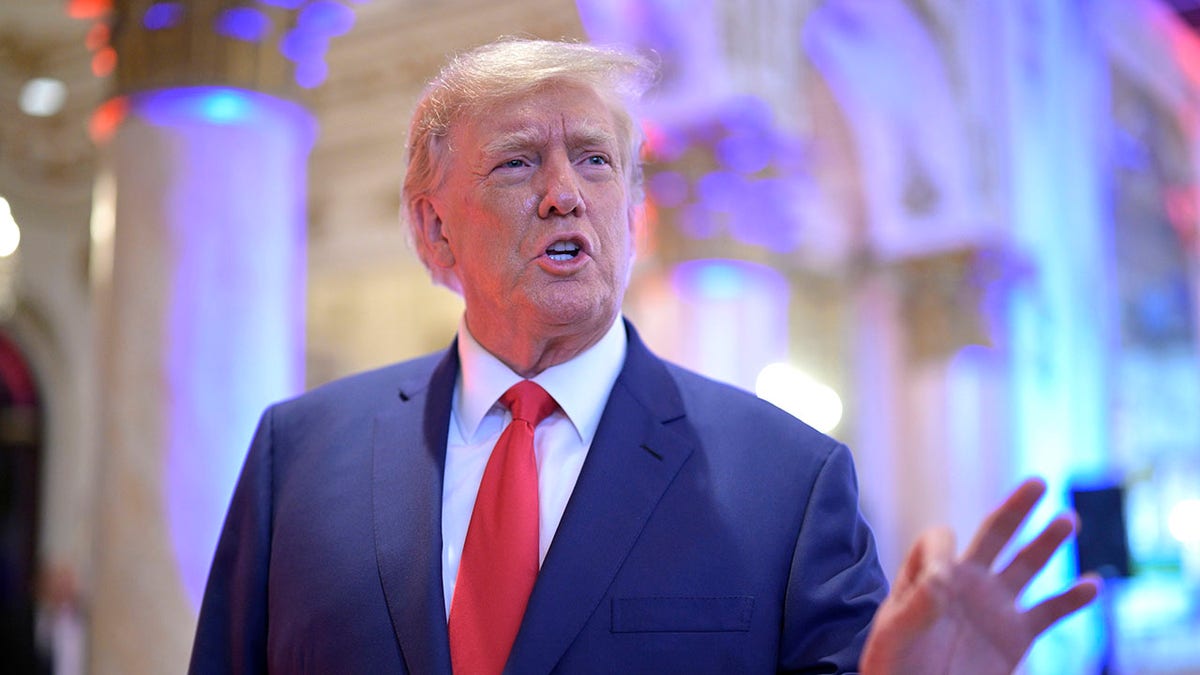
Donald Trump has launched a fiery critique against 60 Minutes and its anchor after the program aired portions of an alleged gunman’s manifesto. The former president accused the news outlet of giving dangerous attention to a violent extremist, calling the decision reckless and politically motivated. This clash reignites long-standing debates about the media’s role in amplifying extremist voices and the fragile line between reporting and sensationalism.
Trump’s reaction was swift and scathing, delivered via social media and at a recent campaign event. “They gave him exactly what he wanted—fame,” Trump said, referring to the suspect behind a recent shooting. “And 60 Minutes played right into his hands. It’s disgraceful.” His comments have drawn both support and criticism, with free speech advocates arguing for transparency and others echoing concerns over glorifying violence.
This piece dissects the controversy, explores the ethical tightrope broadcasters walk, and examines how political figures like Trump leverage media missteps to strengthen their narratives.
Why Trump’s Outrage Resonates
with His Base
Trump’s fury isn’t just performative—it taps into a core grievance among his supporters: the belief that mainstream media elevates voices hostile to conservative values while vilifying right-wing figures. By positioning 60 Minutes as complicit in spreading a gunman’s ideology, Trump reframes the conversation from the shooter’s motives to media bias.
This strategy has worked before. After the 2017 Las Vegas shooting, Trump suggested the media gave shooters “the fame they seek.” In 2023, when a gunman targeted a school in Nashville, he echoed similar concerns. This time, though, the controversy centers on 60 Minutes—a program long seen as a pillar of serious journalism—making the backlash more potent.
Trump’s supporters see the broadcast as confirmation of a broken system. “They read the rantings of a lunatic on national TV but won’t cover real stories about border crises or inflation,” one rally attendee said. For them, the decision to air the manifesto isn’t about public awareness—it’s about power and narrative control.
The 60 Minutes Broadcast That Sparked the Firestorm
The controversy stems from a 60 Minutes segment that included direct excerpts from the alleged shooter’s online manifesto. The report, focused on rising political extremism and threats against public figures, aimed to expose the depth of radicalization in certain online spaces.
During the segment, the anchor read several paragraphs from the document, analyzing its rhetoric and tracing its ideological roots. The intent, according to CBS News, was to “show the public what we’re up against” and “understand the mindset of those incited to violence.”
Yet the method drew immediate criticism. Some viewers felt the verbatim reading crossed a line, granting the shooter an unintended platform. Others argued that summarizing the content would have been sufficient—and safer.
Media ethics experts are divided. “Reading the words aloud gives them weight and reach they might not otherwise have,” said Dr. Elena Pierce, a communications professor at Northwestern. “But suppressing them entirely risks obscuring the truth. It’s a near-impossible balance.”
CBS defended the decision, stating that the network applied content warnings and contextual framing. Still, the backlash—fueled by Trump’s condemnation—has put 60 Minutes on the defensive.
The Ethics of Broadcasting Extremist Manifestos

News organizations have grappled with this dilemma for years. When a violent extremist leaves behind a manifesto, do journalists have a duty to report it—or a responsibility to minimize its spread?
The Columbia Journalism Review has long urged caution. Their guidelines recommend summarizing extremist content rather than quoting it directly, especially when the text contains hate speech, conspiracy theories, or calls to violence. “Every time a network reads these words, it increases the odds that someone else will be inspired,” the publication warned after the 2019 Christchurch attack.
Yet transparency has its defenders. “We can’t sanitize reality,” said veteran journalist Mark Rieffel. “If we don’t show people the full scope of what’s being written online, we’re failing in our duty to inform.”
The debate intensifies when the manifesto includes political references or attacks on public figures. In this case, the document reportedly contained veiled attacks on Trump and other leaders, which complicates the editorial calculus. Does airing such content expose dangerous ideologies—or inadvertently validate a shooter’s warped worldview?
One red flag: research from the University of Alabama suggests that shooters often model their actions after past attacks that received heavy media coverage. Manifestos, when widely disseminated, become part of that feedback loop.
How Politicians Use Media Controversies to Their Advantage
Trump’s response fits a well-worn playbook: seize on a media misstep to delegitimize critical outlets and rally supporters around a shared enemy. This tactic isn’t unique to him—politicians across the spectrum have accused the press of bias—but Trump executes it with unmatched intensity.
By framing 60 Minutes as reckless or corrupt, he shifts focus away from the shooter’s ideology and onto what he calls “fake news.” This serves multiple purposes:
- It protects his image by distancing him from any ideological connection to the attacker.
- It strengthens the “us vs. them” narrative central to his political movement.
- It pressures other media outlets to self-censor out of fear of backlash.
Other politicians have echoed parts of his critique. Senator Tom Cotton, a Republican, called the broadcast “irresponsible,” while Democratic Congresswoman Alexandria Ocasio-Cortez questioned the decision but stopped short of condemning the network outright.
The result? A polarized response that reflects broader fractures in how Americans consume news. For some, the segment was a necessary exposé. For others, it was a dangerous lapse in judgment—one that Trump was quick to exploit.
Real-World Impact: Has Media Coverage Fueled Copycat Threats?
There’s growing evidence that extensive media coverage of mass shootings can lead to copycat incidents. A 2020 study published in PLOS ONE found that each mass shooting covered nationally was followed by an average of 0.3 additional attacks in the next two weeks—a phenomenon known as the “contagion effect.”
Manifestos, in particular, are vulnerable to misuse. The 2011 manifesto of Anders Breivik, the Norwegian extremist who killed 77 people, has been linked to at least four subsequent plots in the U.S. and Europe. In 2019, the FBI noted that the Christchurch shooter’s manifesto was found on the devices of multiple domestic extremists.
When major networks air these texts verbatim, they risk turning them into de facto training manuals. Even with disclaimers, the content spreads rapidly online, where algorithms reward engagement over ethics.
Some newsrooms now use “manifesto protocols” to limit exposure. These include: - Avoiding direct quotes longer than a sentence - Refraining from naming the shooter repeatedly - Focusing coverage on victims and survivors - Using third-party analysis instead of raw text
60 Minutes may now face internal review over whether these standards were met.
A Pattern of Escalation: Trump, Media, and Violent Rhetoric
This latest clash isn’t isolated. Trump has a long history of inflammatory statements about the media, calling journalists “enemies of the people” and suggesting they’re responsible for unrest. In 2018, a pipe bomb was mailed to several CNN executives—an act federal investigators linked to the toxic media climate.
While there’s no evidence Trump endorsed this attack, critics argue that his rhetoric creates a permissive environment for violence. The New York Times editorial board wrote in 2020: “When a leader repeatedly demonizes the press, he shouldn’t be surprised when others take it seriously.”
Now, the irony is sharp: Trump condemns a network for amplifying a gunman’s words—words that may have been shaped, in part, by years of divisive political discourse.
Experts warn that both sides—politicians and media—must exercise restraint. “The media has a responsibility not to glorify violence,” said crisis communications expert Lisa Chen. “But politicians also have a duty not to fuel the rage that leads to it.”
What Should News Outlets Do Differently?
Newsrooms facing similar decisions can take concrete steps to report responsibly without sacrificing impact:
- Summarize, don’t quote – Use precise language to describe the content without repeating it verbatim.
- Contextualize aggressively – Frame extremist rhetoric within broader societal trends, not as isolated ideology.
- Center victims and survivors – Shift focus from the perpetrator to those affected.
- Delay publication when possible – Avoid immediate release of sensitive materials to prevent real-time amplification.
- Consult ethics boards – Involve editorial advisers before airing or publishing manifestos.
Some international outlets have adopted strict non-amplification policies. The BBC, for instance, rarely names mass shooters in headlines and avoids quoting manifestos altogether. Sweden’s public broadcaster SVT developed a “no notoriety” policy after a 2017 attack, which has since been adopted by several Nordic newsrooms.
60 Minutes may now be forced to reconsider its approach—especially as political pressure mounts.
Final Thoughts: A Moment of Reckoning for Media and Politics
The fallout from Trump’s rebuke of 60 Minutes reveals deeper tensions in American public life. On one side: a demand for unfiltered truth. On the other: the fear that truth, when mishandled, can become a weapon.
This incident should serve as a wake-up call—not just for CBS, but for every outlet covering extremism. Reporting on violence requires more than journalistic courage; it demands ethical precision.
For politicians like Trump, the moment also offers a chance for reflection. Condemning media sensationalism is valid. But it rings hollow without acknowledging how political rhetoric can feed the very extremism being condemned.
The path forward requires accountability on all sides. Media must report with restraint. Politicians must lead with responsibility. And the public must demand better from both.
Act now: Support newsrooms that prioritize ethical reporting. Call out rhetoric that demonizes the press. And remember—every time we share, watch, or amplify, we shape the narrative. Choose wisely.
FAQ
What should you look for in Trump Slams 60 Minutes Anchor for Reading Gunman’s Manifesto? Focus on relevance, practical value, and how well the solution matches real user intent.
Is Trump Slams 60 Minutes Anchor for Reading Gunman’s Manifesto suitable for beginners? That depends on the workflow, but a clear step-by-step approach usually makes it easier to start.
How do you compare options around Trump Slams 60 Minutes Anchor for Reading Gunman’s Manifesto? Compare features, trust signals, limitations, pricing, and ease of implementation.
What mistakes should you avoid? Avoid generic choices, weak validation, and decisions based only on marketing claims.
What is the next best step? Shortlist the most relevant options, validate them quickly, and refine from real-world results.