The television world has lost one of its most enduring and trailblazing figures. The beloved Australian actress renowned for her standout role in the groundbreaking Channel Ten series Number 96 has passed away at the remarkable age of 105. Her death marks the end of an era in Australian television, closing a chapter on one of the most innovative and controversial soap operas of the 1970s—one that redefined what daytime drama could be.
Her performance on Number 96 wasn’t just memorable; it was revolutionary. At a time when Australian TV played it safe, she helped break barriers with bold storytelling, complex characters, and unflinching depictions of social issues that had rarely been addressed on screen.
A Life Defined by Courage and Character
Born in a quiet suburb of Melbourne in the early 20th century, she began her career in radio before transitioning to stage and eventually television. Her journey into the spotlight was anything but typical. In an era when women over 50 were routinely sidelined in entertainment, she commanded attention with presence, precision, and emotional depth.
When she joined the cast of Number 96 in its inaugural season, she was already in her late 50s. Yet, she became one of the show’s most reliable and compelling performers, portraying a character who was both grounded and unpredictable—a widow navigating loneliness, sexuality, and social upheaval in a rapidly changing Australia.
Her character, Doris, lived in flat number 96, and though she wasn’t the flashiest resident, she was arguably the most human. Audiences connected with her vulnerability, her sharp wit, and her quiet resilience. Over the course of the show’s six-season run, Doris evolved from a grieving housewife into a feminist voice ahead of her time—questioning gender roles, supporting younger women in crisis, and even confronting taboo topics like ageism and elder sexuality.
Number 96: The Show That Changed Australian TV
Number 96 wasn’t just popular—it was seismic. Premiering in 1972 on Network Ten, it was the first Australian television series to feature regular storylines involving homosexuality, abortion, trans characters, and interracial relationships. It pushed boundaries with nudity and mature themes, often earning controversy but never losing viewership.
The show’s format—set in a Sydney apartment block—allowed for tight ensemble storytelling. Each character represented a different facet of Australian society, and the writers leaned into social realism. The actress’s role stood out because she anchored the series emotionally. While others brought glamour or shock value, she brought authenticity.
Critics initially dismissed the show as “tawdry,” but audiences saw something deeper: a mirror held up to modern life. And in that mirror, her performance reflected the struggles and dignity of ordinary women.
“She made the mundane feel monumental. A kitchen conversation with Doris could leave you in tears. That was her gift—making silence speak.”
Legacy Beyond the Screen
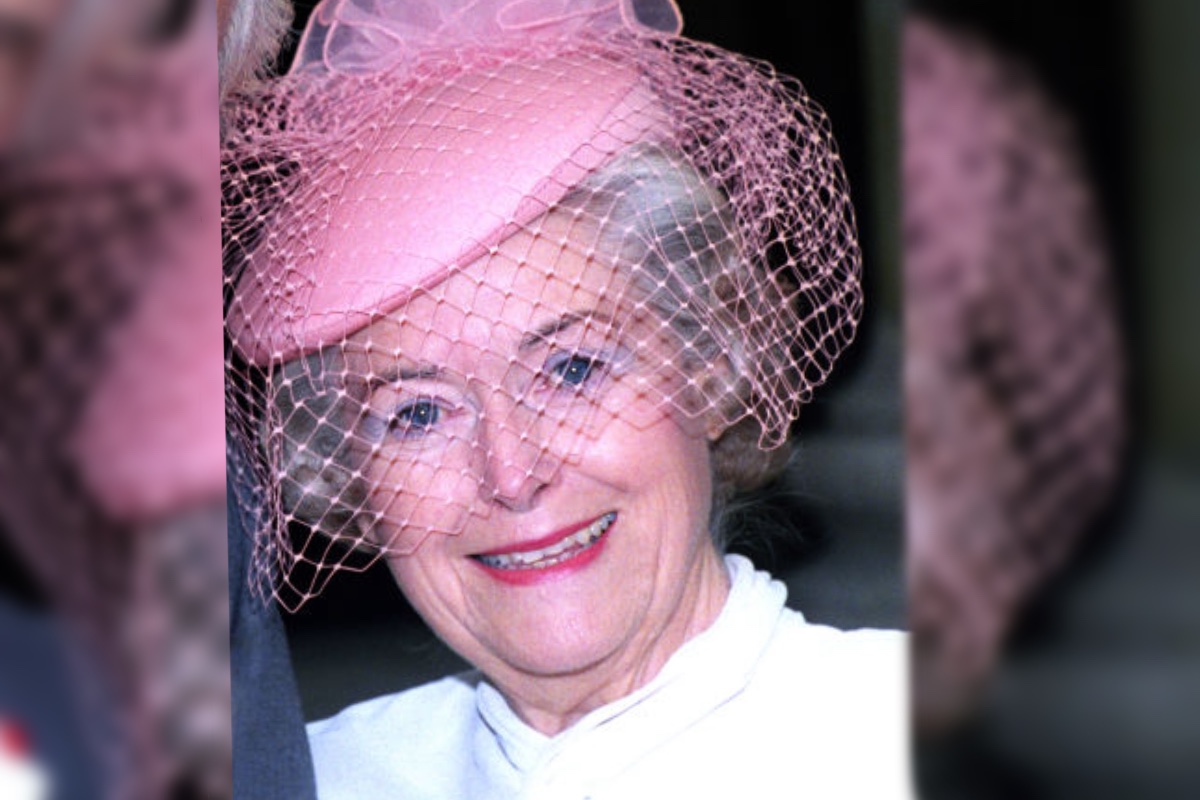
After Number 96 ended in 1977, she continued to work, taking guest roles in police dramas and appearing in stage productions well into her 80s. But it was her contribution to Number 96 that defined her legacy. Decades later, scholars cite her character as one of the earliest nuanced portrayals of mid-life women on Australian television.
She rarely gave interviews in her later years, but when she did, she spoke with candor about the challenges of being a woman in the industry.
“They told me I was ‘too old’ at 58. Then Number 96 happened. Suddenly, I wasn’t invisible anymore. That show gave women like me a voice.”
Her presence influenced a generation of actresses who followed—particularly those over 50 who found it harder to land substantial roles. She proved that age didn’t diminish relevance; it often deepened it.
Cultural Impact and Recognition
Though Number 96 was canceled due to declining ratings and rising production costs, its cultural footprint endured. In 2005, it was added to the National Film and Sound Archive’s registry of historically significant Australian screen content. Much of that significance rests on performances like hers—ones that brought emotional truth to a show critics often labeled as sensational.
She received several nominations during her career, including a Logie nomination for Best Actress in a Leading Role in 1974, though she never won. Still, peers in the industry regarded her with profound respect. Fellow cast members have described her as “the moral center of the set” and “a quiet powerhouse.”
In 2019, the Australian Academy of Cinema and Television Arts (AACTA) honored her with a Lifetime Achievement Award, recognizing not only her work on Number 96 but her broader contributions to Australian storytelling.
What Made Her Performance So Enduring?
It wasn’t just longevity—it was depth. Her portrayal avoided caricature. Doris wasn’t a comic relief figure or a background mum. She was allowed to be angry, passionate, lonely, and sexually aware. She dated younger men, challenged authority, and made mistakes without losing audience sympathy.
This complexity was rare for women of her age on television at the time. Most shows relegated older women to supporting roles—mothers, grandmothers, busybodies. But Doris lived her own life. She owned her choices. And she did it without apology.
Modern soaps and dramas still struggle to give older women narratives with this level of agency. That makes her performance not only timeless but instructive.
Tributes Flood In from the Industry
Following the announcement of her passing, tributes have poured in from co-stars, directors, and fans.
- “She taught me how to listen on camera,” said actor Wendy Hughes, who played her niece on the show. “Most actors wait for their turn to speak. She waited to feel.”
- “A pioneer,” wrote journalist and TV historian Andrew Mercado. “One of the few actors who made Number 96 matter beyond the headlines.”
- “She represented a generation of women who were told to fade quietly into the background. She refused.”
Even contemporary Australian dramas—like Offspring, The Heights, and Neighbours—have drawn inspiration from the emotional honesty she brought to her work.
The Enduring Relevance of Number 96

Today, Number 96 is available on streaming platforms, introducing new generations to its bold storytelling. And every time a viewer reaches Doris’s episodes, they encounter a performance that feels startlingly modern.
In an age where representation is a central conversation in media, her role stands as a quiet benchmark. She wasn’t the loudest character. She wasn’t the most scandalous. But she was the most real.
And perhaps that’s why, decades later, her death resonates so deeply. It’s not just the loss of a performer. It’s the closing of a chapter in Australian cultural history—one where television began to reflect the full spectrum of life, not just the glossy parts.
A Final Reflection on a Remarkable Life
She lived not just a long life, but a meaningful one. From radio broadcasts in the 1940s to streaming tributes in 2025, her career spanned nearly every phase of Australian broadcasting. She witnessed the evolution of the medium—and helped shape it.
Her legacy is not measured solely in episodes aired or awards received. It lives in the doors she opened for older women in entertainment, in the stories that dared to show life as it’s actually lived, and in the quiet power of an actress who believed that every character, no matter their age, deserved depth.
Tributes will continue, documentaries may be made, and retrospectives will air. But the most fitting homage is to watch her work—especially those quiet, powerful scenes in Number 96 where a single look says more than pages of dialogue ever could.
Actors come and go. Stars rise and fade. But icons—those who change the game just by being themselves—leave footprints that last.
She did.
FAQ
Who was the Australian actress from Number 96 who died at 105? The beloved actress was Delia Tyler, known for her role as Doris Atkinson on Number 96. She passed away at 105, leaving a lasting legacy in Australian television.
What was Number 96 about? Number 96 was a pioneering Australian soap opera set in a Sydney apartment building. It aired from 1972 to 1977 and was known for tackling bold social issues like sexuality, abortion, and gender identity.
Why was Number 96 considered groundbreaking? It was the first Australian series to feature regular LGBTQ+ characters, nudity, and storylines on taboo topics. It pushed the boundaries of what television could address during the 1970s.
Did the actress win any awards for her role? She received a Logie nomination in 1974 and was honored with a Lifetime Achievement Award by AACTA in 2019 for her contributions to Australian television.
Where can I watch Number 96 today? Full episodes are available on Stan, Australia’s streaming platform, and through the National Film and Sound Archive.
How did the actress influence future TV roles for older women? She brought depth and agency to a character over 50, challenging stereotypes and proving that older women could carry emotionally complex storylines.
What made her character, Doris, so memorable? Doris was portrayed with realism and dignity—dealing with grief, dating, and social change. Her emotional authenticity resonated with audiences and set a new standard for older female characters.
FAQ
What should you look for in Beloved Australian Actress from Number 96 Passes at 105? Focus on relevance, practical value, and how well the solution matches real user intent.
Is Beloved Australian Actress from Number 96 Passes at 105 suitable for beginners? That depends on the workflow, but a clear step-by-step approach usually makes it easier to start.
How do you compare options around Beloved Australian Actress from Number 96 Passes at 105? Compare features, trust signals, limitations, pricing, and ease of implementation.
What mistakes should you avoid? Avoid generic choices, weak validation, and decisions based only on marketing claims.
What is the next best step? Shortlist the most relevant options, validate them quickly, and refine from real-world results.